

How the Looplex platform connects legal work
Understand the relationship between matters, work, documents, knowledge, and results in Looplex.
A legal matter brings together information, decisions, and activities that evolve together. A new document can change an analysis; the analysis may call for further evidence; a decision may create work for several professionals. Looplex connects these steps to the context of the matter so that the team can continue from what has already been gathered and completed.
This continuity helps reduce duplicate entries, repeated document sharing, and the need to reconstruct the history whenever work moves between people or systems.
The case holds the context; work produces the deliverables
In the platform, a case organizes a legal matter throughout its lifecycle. It may represent proceedings, a contract under negotiation, a consultation, or another request. A work item is an activity or set of steps with a goal, such as analyzing documents, preparing a defense, or reviewing a draft.
A single case can involve several work items, carried out by the team, external providers, or with the Assistant. Each uses the relevant materials and produces results that can contribute to subsequent steps.
| Element | What it represents | Contract negotiation example |
|---|---|---|
| Case | The matter being managed | Negotiation of a supply agreement. |
| Work item | A goal and its execution | Review of the draft received. |
| Documents and data | Materials and information used | Versions, parties, amounts, terms, and correspondence. |
| Reference knowledge | Applicable criteria | Approved clauses and negotiation policy. |
| People and responsibilities | Who leads, performs, and approves | Responsible attorney, requesting team, and approver. |
| Results and records | What was produced and decided | Revised draft, outstanding issues, and approvals. |
The relationships between these elements place a deliverable in the context of its production. They also help distinguish incoming information, a hypothesis under analysis, and guidance that has actually been approved.
Products, tools, modes, and solutions
The names used in the documentation describe different roles:
| Term | Meaning | Examples |
|---|---|---|
| Product | A set of capabilities addressing a work or management need. | Cases, Content, Assistant, Intelligence, Builder, Finance, and Dashboards. |
| Tool | A resource with a specific operational function. | Intake, Analyzer, Monitoring, Calculator, Filing, and Export. |
| AI mode | How AI participates in an activity. | Copilot and Autopilot. |
| Work tracking environment | Where professionals interact with and review delegated work. | Workbench, listed in the Tools section. |
| Solution | A combination of capabilities for a concrete need. | Preparing a defense, handling a contract, or managing fees. |
This organization makes it possible to start with a need and understand which capabilities contribute to meeting it. A solution may combine several products and tools, depending on its scope.
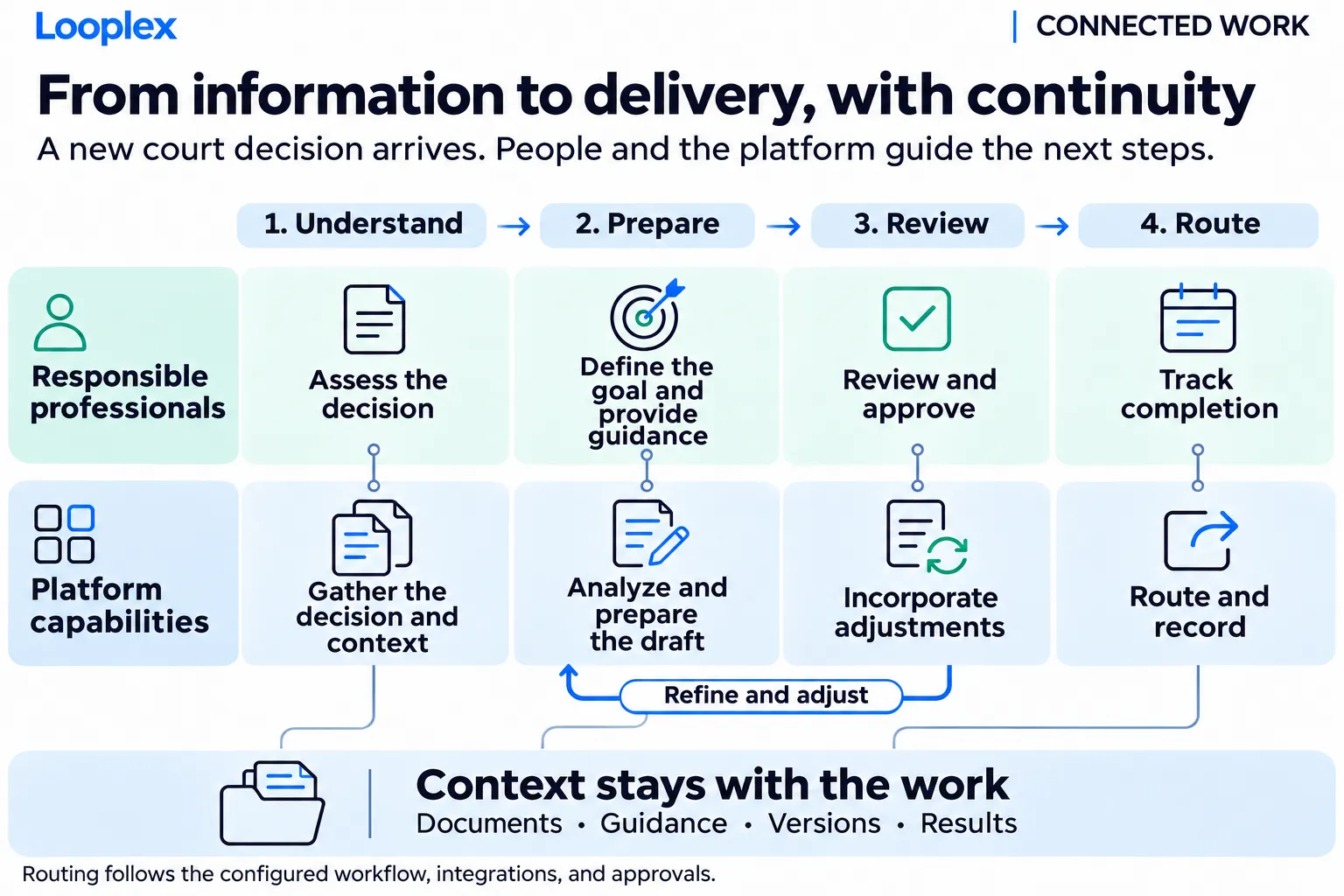
Example: a new decision in a court case
A decision received through Monitoring, an integration, or the attorney can be associated with the case and relevant documents. Intelligence supports understanding the content and assessing possible next steps.
If a filing needs to be prepared, the team defines the goal and assigns responsibility. Intake can support routing under configured policies. The Assistant contributes to analysis and drafting using the available documents and applicable guidance.
Work delegated in Autopilot is tracked in Workbench, where the attorney can add information and review the deliverable. Depending on the workflow, the approved document proceeds to filing and its records are incorporated into case tracking. Routing depends on enabled integrations and the required checks.
The result remains linked to the decision that prompted the work and to the materials used. The procedural appeals solution provides a detailed example.
Example: reviewing a contract against organizational criteria
A business unit requests a draft review and explains the purpose of the engagement. These elements become part of the case context alongside the versions and communications received.
Content provides the documents and authorized references. The Assistant can compare terms, identify issues, and prepare suggestions using playbook criteria. The attorney evaluates the results and leads the negotiation with the requesting team and the counterparty.
A provision outside delegated authority may require specific approval. Once a decision is made, the corresponding version and approved guidance support the next steps. Where the workflow includes signing and obligation tracking, those steps use the relevant records according to the configuration of the contract management solution.
Continuity with the systems you already use
Integration can bring in information from other sources and deliver results to the systems where the organization manages its operations. This allows Looplex capabilities to work alongside systems used by clients, partners, and corporate teams.
Export, for example, contributes to delivering information and results to connected systems. Managed integration services support implementation and operation within the contracted scope.
Each integration should define which data is exchanged, which system maintains the authoritative record, and how discrepancies or update failures are handled. Sharing context also requires respecting each participant’s access limits.
The experience follows each person’s responsibilities
Attorneys need the materials and next steps relevant to their deliverables. Team leads need to track outstanding issues and responsibilities. Managers need operational indicators and information. The platform uses work context to support these perspectives, subject to available capabilities and permissions.
This is how Looplex applies the concept of a digital experience platform (DXP): connecting information, capabilities, and interactions throughout a journey. In legal work, that concept is expressed through continuity between analysis, production, management, and tracking.
Continue with Legal knowledge management. The foundations of service composition and integration are covered in Platform Engineering and Looplex Graph.