

Works — Intake and Work Assignment
Organize legal requests and route each assignment according to your organization’s policies.
Looplex Works is the tool for receiving requests, organizing triage, and assigning work to those responsible for execution. It connects an incoming request with the determination of what needs to be done, its priority, and who should participate.
Routing and assignment policies are defined in legal playbooks and applied through configured workflows. Work can be performed by the team, by Looplex Assistant, or through collaboration between them.
Receiving and Organizing Requests
A request can begin with an internal submission, a client request, a procedural communication, or information received through an integration.
Works organizes these inputs with the elements needed for triage: source, subject, documents, context, and expected outcome. Forms and structured requests help gather the information required for each type of work.
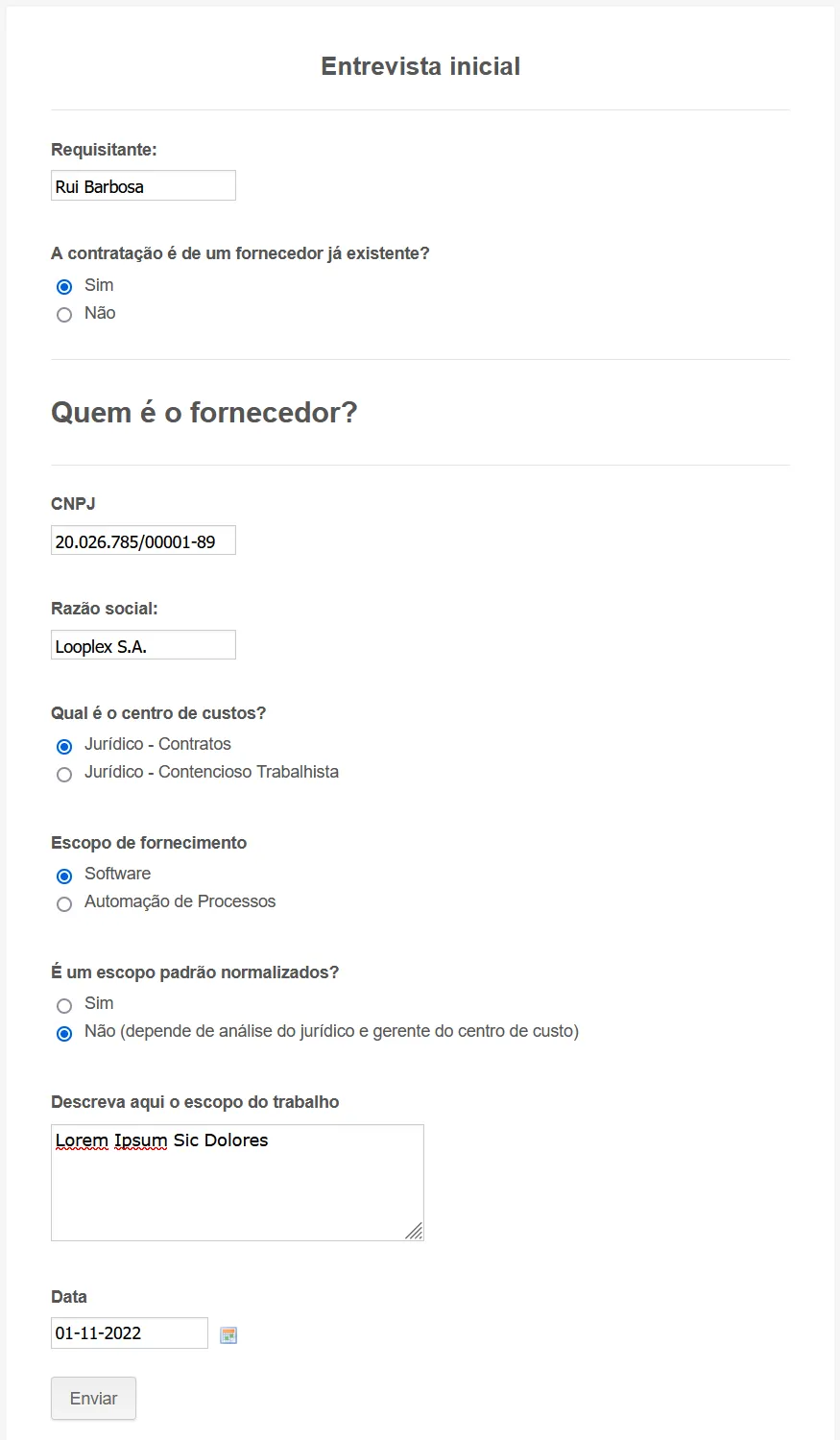
Routing takes account of the relationship with the relevant matter or project. When a new matter needs to be opened, that step can form part of the configured workflow, with the applicable data and validation requirements.
Receiving information and initiating work are distinct steps. A document may simply supplement a matter’s context; an incomplete request may require clarification; a request may lead to one or several assignments. Triage determines the appropriate treatment before routing work for execution.
Routing by Type of Work
Routing identifies the applicable path for a request: which activity is needed, what information it requires, and which workflow should be used.
When Assistant participates, the specialty identifies the type of work, such as contract review, defense preparation, or a legal opinion. Each assignment is a specific instance of that activity, associated with an objective and a context.
Rules can take account of the client, practice area, nature of the request, and other criteria defined by the organization. The activity can be selected through a professional’s assessment, a configured rule, or a recommendation from Intelligence, subject to the applicable authorizations.
Assignment and Responsibilities
Once the required work has been identified, assignment determines the responsible team or professional and the participation of available execution capabilities.
This allocation follows the rules configured for the operation, considering the organization’s criteria, such as expertise, client portfolio, and review responsibilities. Selecting a specialty and assigning responsibility are complementary decisions: one describes the work; the other establishes who is accountable for its management.
Delegating an activity to Assistant preserves the human responsibilities defined in the workflow. The handoff should identify who monitors the result, who can resolve questions, and who performs the required reviews or approvals.
Priority, Deadlines, and Service Levels
Works helps organize the order of service according to the available data and the organization’s policies. Three elements should be distinguished:
| Element | Role in Organizing Work |
|---|---|
| Legal deadline | The time limit applicable to an action, identified and checked according to the relevant legal criteria. |
| Service deadline | A commitment agreed with the client or defined internally for an activity, which may form part of a service level agreement (SLA). |
| Operational priority | The order of service established according to urgency, impact, and the organization’s other criteria. |
These elements can guide scheduling and assignment, depending on the configuration in place. Queue order should take account of applicable deadlines, and an internal SLA does not change a legal deadline.
Intake, routing, and completion records can also support service level monitoring and the identification of bottlenecks, according to the indicators available in the solution.
Missing Information and Exceptions
Intake rules should define how to handle requests that are not yet ready for execution.
A request missing essential documents may require additional information. A situation outside the established criteria may need specialist assessment. A handoff requiring authorization should go through the designated person before proceeding.
These treatments are part of workflow design. The aim is to make clear what is missing, who needs to act, and which condition allows the work to continue.
Example: From Incoming Information to an Assignment
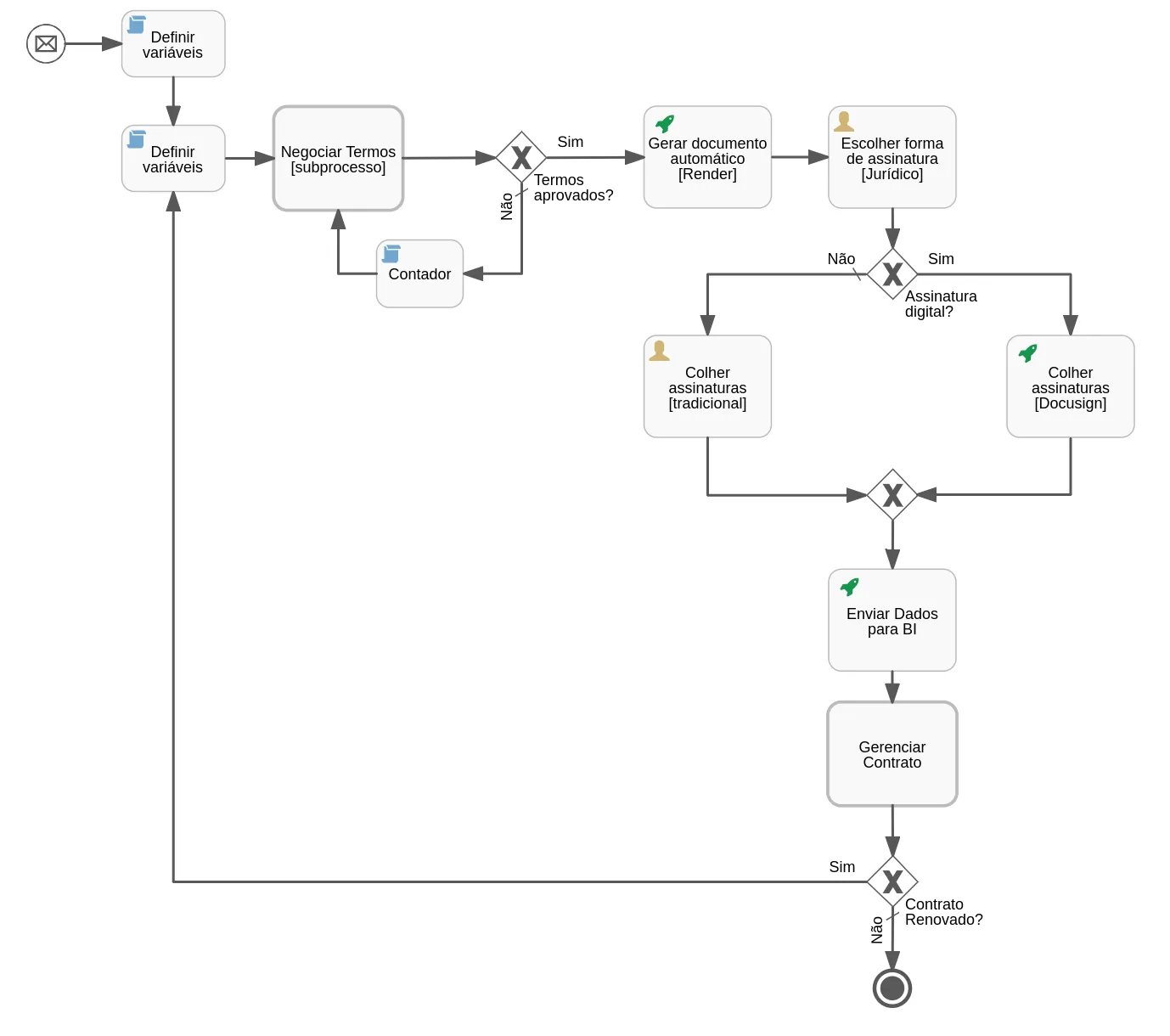
A procedural communication can follow this path, depending on the organization’s configuration:
| Participant | Role in the Example |
|---|---|
| Monitoring | Captures the communication and makes the information associated with the matter available. |
| Intelligence | Supports interpretation of the content and suggests actions for assessment. |
| Works | Organizes routing of the selected action, its priority, and the assignment of responsibilities. |
| Assistant | Supports or carries out the defined assignment, such as preparing an analysis or a draft. |
| Workbench | Brings together monitoring, clarification, and review of the delegated assignment. |
Playbooks guide the criteria throughout this process. The sequence can vary: a direct request can reach Works, and a professional can delegate an assignment without going through every stage.
Relationship with Other Platform Capabilities
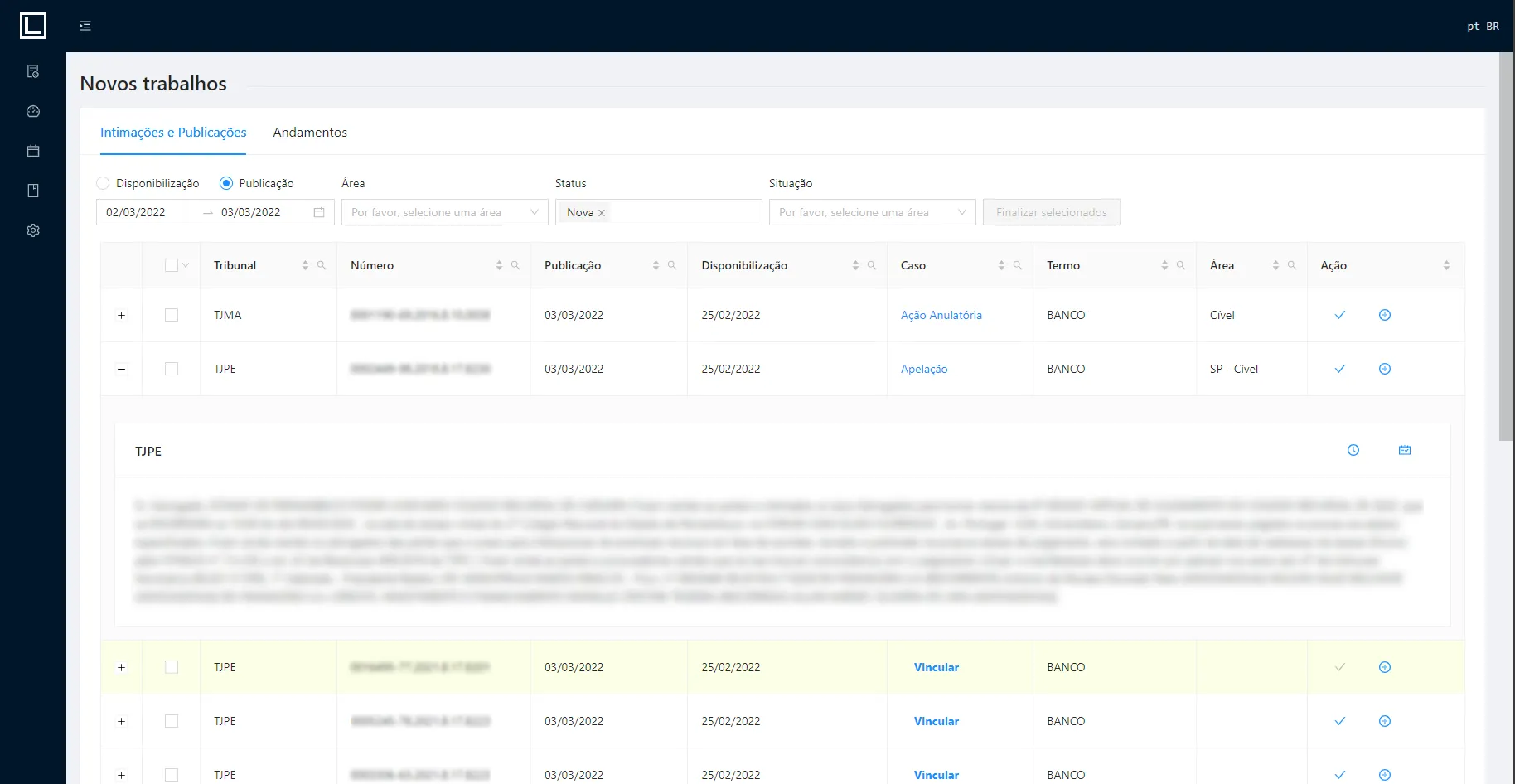
Monitoring supplies information captured from monitored sources. Intelligence supports the assessment of possible actions. Works organizes intake and assignment, while Workbench brings together interaction and oversight for delegated work.
The modes of use describe how AI participates in these activities. In Copilot, the user guides the interaction. In Autopilot, the platform conducts delegated operations within the authorized scope. Works can combine routing performed by people with automated operations according to the workflow in place.
Availability
Works is in technical preview for selected clients. Intake channels, assignment criteria, integrations, and available capabilities depend on the enabled scope and the organization’s configuration.